Leads lost in WhatsApp and registers cost real sales. Learn the signs your business needs a CRM, what to track, and how to get your team to use it.
Picture a typical week at a growing Pakistani business. Enquiries arrive through WhatsApp, Facebook, phone calls and walk-ins. A salesperson notes some in a register, keeps others on a personal phone, and means to call back on Thursday. By Friday, a serious buyer has already gone to a competitor. Nobody decided to lose that sale. There simply wasn't a system to prevent it.
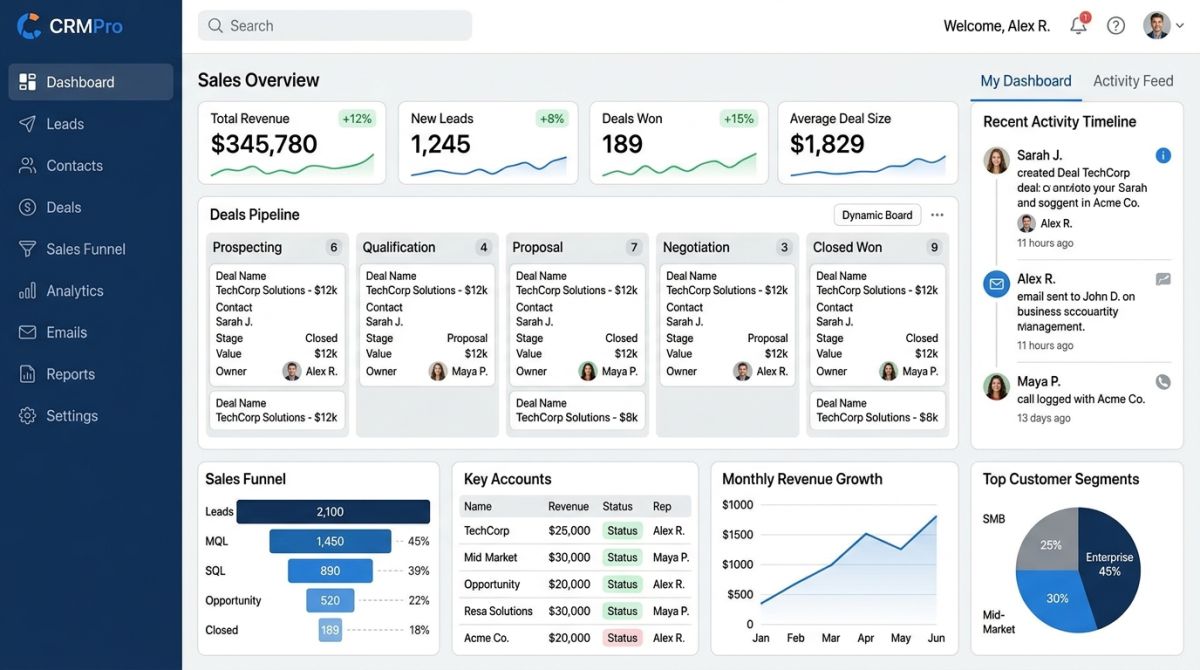
A Customer Relationship Management (CRM) system fixes this by keeping every lead, conversation and follow-up in one shared place.
What a CRM does
A CRM answers the questions that are hard to answer from a register or a group chat:
- Who has enquired this month, and where did they come from?
- Who is due a call today, and has anyone called them yet?
- How much business is in the pipeline, and at which stage?
- What did we last promise this customer, and at what price?
- Which salesperson needs help, and which product sells best?
Signs your business needs one
The title of this article is a little bold, because not every business needs a CRM today. Look for these signs:
- Customers call back and say that nobody followed up.
- Customer details sit on staff phones, so when someone leaves, their contacts leave too.
- Two salespeople sometimes quote the same customer different prices.
- You can't say how many enquiries you received last month, or how many converted.
- You spend money on advertising but don't know which channel brings buyers.
- Repeat customers are never contacted unless they get in touch first.
If you have only one or two salespeople and a few enquiries a week, a well-kept shared spreadsheet may be enough for now. Once you have three or more sales staff, or leads coming from several channels, a spreadsheet tends to break down: no reminders, no history, and no clear owner for each lead.
What matters for Pakistani SMEs
Most CRM advice assumes a business that lives on email. Local businesses usually work differently, so check for these before you choose:
- WhatsApp and phone workflows. If that's where your customers talk to you, it must be quick to record those conversations and set the next follow-up.
- Works well on a phone. Field and shop staff won't go back to a desktop to enter notes.
- Pakistani phone numbers. Treat 0300-1234567 and +92 300 1234567 as one customer, to avoid duplicates.
- Local costs. Foreign CRMs are often priced per user, per month, in dollars. Compare the full yearly cost in rupees, including exchange rate risk and card payment issues.
- Connections to your other systems. Sales should link to invoices, stock or accounts, not be typed in twice.
Start with a simple pipeline
A pipeline shows each deal's stage. Keep it short, and define each stage by what has actually happened rather than how the salesperson feels about the deal:
| Stage | Means | Next action |
|---|---|---|
| New enquiry | Contact received, not yet spoken to | Call within a set time |
| Qualified | Real need and budget confirmed | Arrange a demo or visit |
| Quotation sent | Customer has the price in writing | Follow up on a set date |
| Negotiation | Discussing terms | Get a decision date |
| Won or lost | Closed, with a reason recorded | Invoice, or review why it was lost |
Make "reason lost" a required field. After a few months, a pattern such as "price too high" or "no response in time" tells you exactly what to fix.
Five numbers worth tracking
- Leads by source. Which channel brings enquiries?
- Conversion rate. What percentage of leads become customers, overall and per channel?
- Response time. How long does a new lead wait for its first reply?
- Overdue follow-ups. How many promised callbacks were missed?
- Pipeline value. How much business is open, and at which stage?
A channel with few leads but a high conversion rate may deserve more of your budget than a noisy one that never buys.
Getting your team to use it
Most CRM projects fail because of people, not software. Staff stop entering data if it feels like extra work done only for management. To avoid this:
- Start small. Launch with leads, follow-ups and the pipeline. Add features later.
- Keep forms short. Ask only for what you'll actually use. Name, phone, source and next step are enough to begin.
- Make it useful to the salesperson. A daily list of who to call helps them sell more.
- Lead from the top. Run sales meetings from the CRM screen. If it isn't in the system, it didn't happen.
- Import clean data. Remove duplicates before migrating, or staff will stop trusting it on day one.
Keep customer data safe
A CRM holds your customer list, one of your most valuable assets. Insist on individual logins rather than a shared password, role-based access so staff see only what they need, restricted bulk exports, an activity log, and regular backups that you have tested.
Where to go from here
Before buying anything, check your last 20 enquiries. How many can you trace to a clear outcome? The answer will tell you how urgent this is. ShahParzSoft's CRM system covers lead capture, sales pipelines, tasks, support tickets and team dashboards, and you can request a demo using your own sales process. For more general advice, see how to choose the right software for your business.